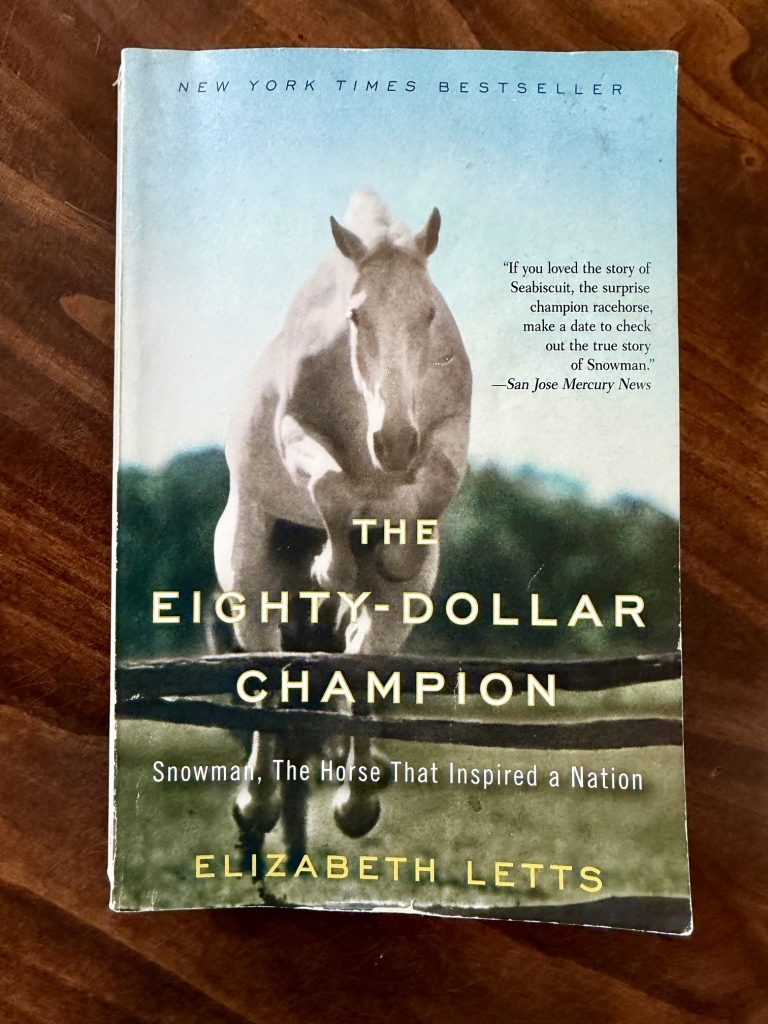
 Some stories are so much like a fairy-tale that you wouldn’t believe them if they didn’t actually happen. In many cases, these stories are about sports underdogs triumphing against all odds such as: Invincible (the tale of a 30-year-old bartender who attended an open NFL tryout and made the team) and Miracle (the underdog USA hockey team that beat the seemingly unstoppable Russians). The Eighty-Dollar Champion is another example. Published in 2012, the book is about horse trainer Harry de Leyer saving a horse from execution and, after observing his talent for jumping, training him to become a show jumping champion.
You can’t make this stuff up and if you tried you would be the cheesiest writer ever. Author Elizabeth Letts didn’t make anything up – she did her research and wrote the biography of the invincible miracle horse Snowman. And wow does it resonate. A plow horse on his way to be slaughtered (horrifying), de Leyer paid $80 for Snowman – a big, calm grey who starts out as a lesson horse for kids and then becomes the “Cinderella horse” who captures the hearts of show jumping fans across the country. The connection between humans and horses (and humans and dogs as well) is something you feel – you’ve either experienced it or you haven’t – and it is the best. “Handed to him for only eighty dollars and a moment’s worth of compassion,” Snowman changed de Leyer’s life and the life of his family which included multiple children. The trainer quickly realized that “his gentle plow horse had the heart of a lion.”
I picked this book up at a used bookstore in Cape Cod because I recognized the author’s name. She wrote The Ride of Her Life which I read in March 2025. Clearly Letts is a horse person as integrating information about the horse world and relevant historical events is a pattern throughout both of these narratives. Also, both stories took place in the 1950s. My only minor critique is that, similar to Ride, Letts is repetitive when driving her main points home. She mentions aspects like Snowman’s calmness, his narrowly avoided slaughterhouse fate, show horses’ tendency to be skittish, and the snobby mentality of the show jumping community so many times I thought I had accidentally re-read pages. While all of those points are important, the reader doesn’t need them hammered into them page after page, chapter after chapter.
That being said, learning about the history of horses in America was fascinating. Draft horses for strength, thoroughbreds for speed, warrior horses for “sturdy physiques and gentle, courageous temperaments.” I love all of that. Additionally, I learned that Black Beauty was originally meant for adults to “induce kindness, sympathy, and understanding treatment of horses” and that “the sport of horse jumping developed relatively recently, growing out of the European tradition to hunting on horseback.”
Throughout the narrative, there is a clear parallel between the hardships de Leyer and Snowman endured before meeting one another. Letts consistently mentions their abilities to stay calm and give everything – horse competitions and life – their best shot. “He believed Snowy had untapped potential – unfulfilled promise that mirrored his own.” Determination and big dreams is another overarching theme and, “by the summer of 1958, America was ready for a hero.”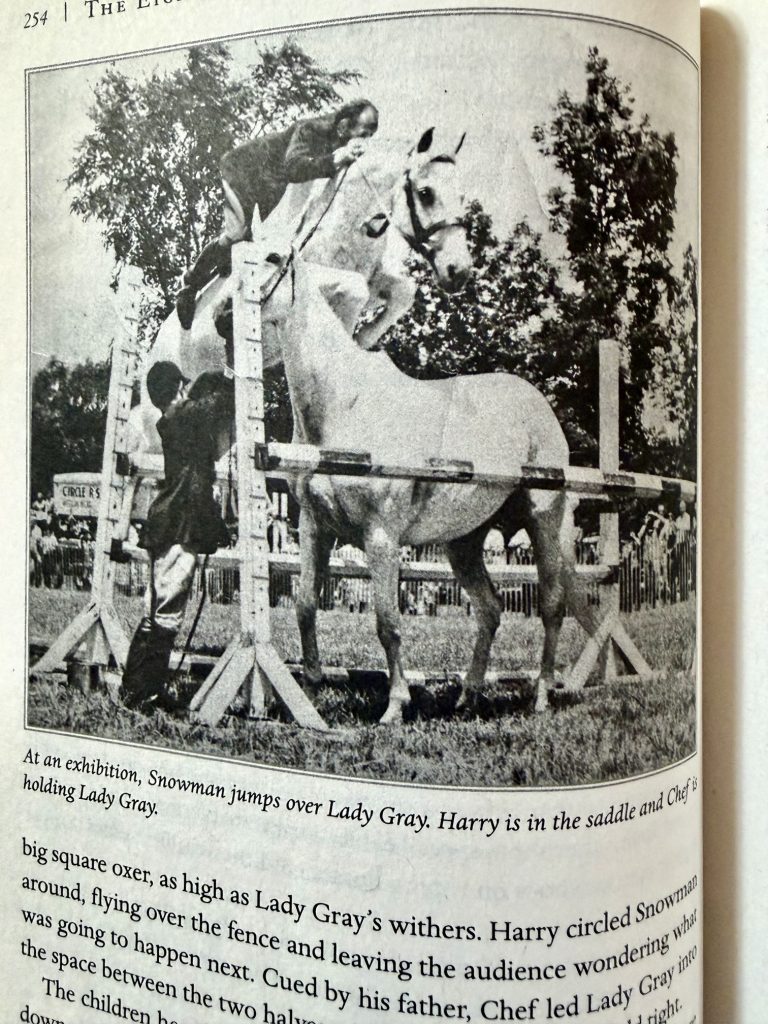
Another aspect of this book that fascinated me was how the introduction of television led to the rise of sports. The author discusses how television elevated spectator sports by expanding the audience beyond the people who were physically there. According to Letts, the Kentucky Derby was first televised in 1952 and, due to its increasing popularity, two years later the prize money doubled from $50,000 to $100,000. Additionally, journalist Marie Lafrenz was an integral part of Snowman’s popularity as she immediately figured out his story was worth telling as she clacked away on her typewriter in the stands. Lafrenz proved to be a smart journalist who found her angle and ran with it because she knew that the public is always looking for someone (human or animal) to root for – especially an underdog. She also noticed that de Leyer brought his wife and their crew of kids to every event making the competitions a family affair.
I’ve loved horses since I can remember, but I never participated in horse shows or rode an English saddle – trails and western saddles for me always. But this book isn’t about snobby horse show people and their upper crust proclivities. It’s about the bond between a horse and rider and how teamwork, dedication, patience, and perseverance wins the day. “Every person and every horse was a combination of what you could see on the outside and what he carried with him on the inside.” As always, every notable story needs excellent photos and the one of Snowman jumping over another horse took my breath away. I’ve never seen anything like it. And clearly, no one had ever seen a horse like Snowman.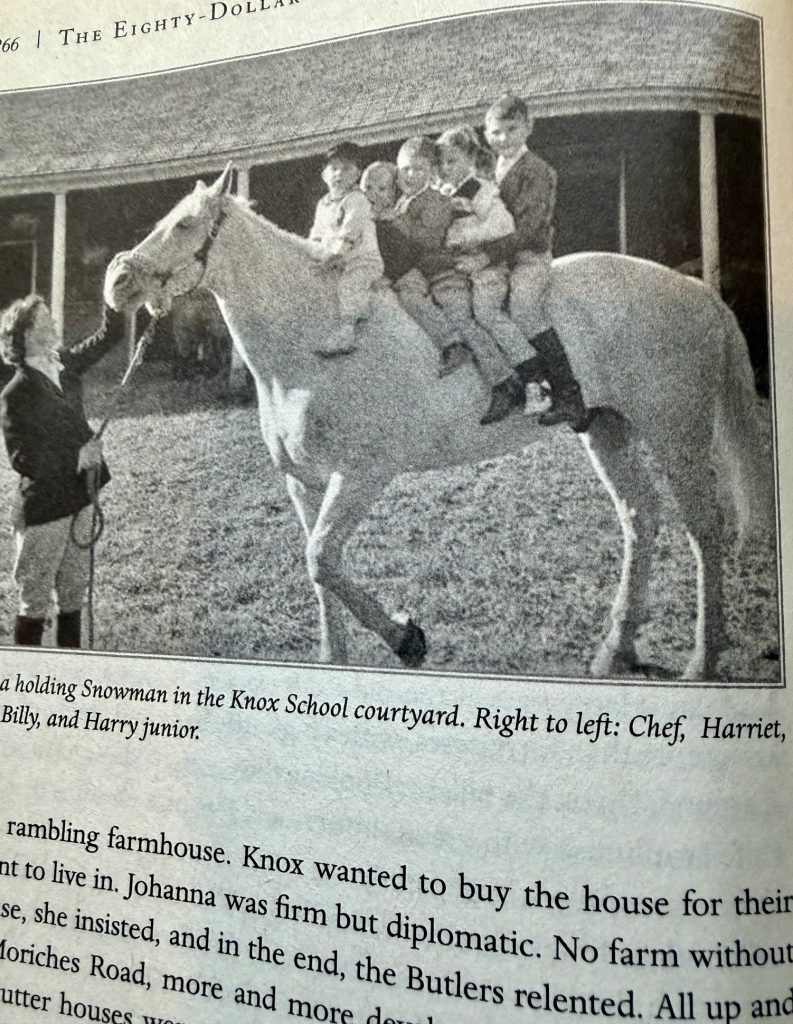
Quotes
“The horse was starting to trust him, and Harry knew from experience that once a horse trusted you, he would soon become your ally.”
“Some horses are born to be teachers, and Snowman had a true vocation for his new profession.”
“To be paid to ride horses seemed like incredible good fortune.”
“Harry was pretty sure that horses were a whole lot smarter than people gave them credit for.”
“There is one thing no horseman can ever put a price on, and that is heart.”
“Messages are telegraphed from horse to rider in a way that, at its highest level, is almost invisible to the spectator.”
“He knew well enough to jump paddock fences to find his way home.”
“Take care of your horse and he’ll take care of you.”
“The horse knew how to steal hearts.”



Leave a Reply